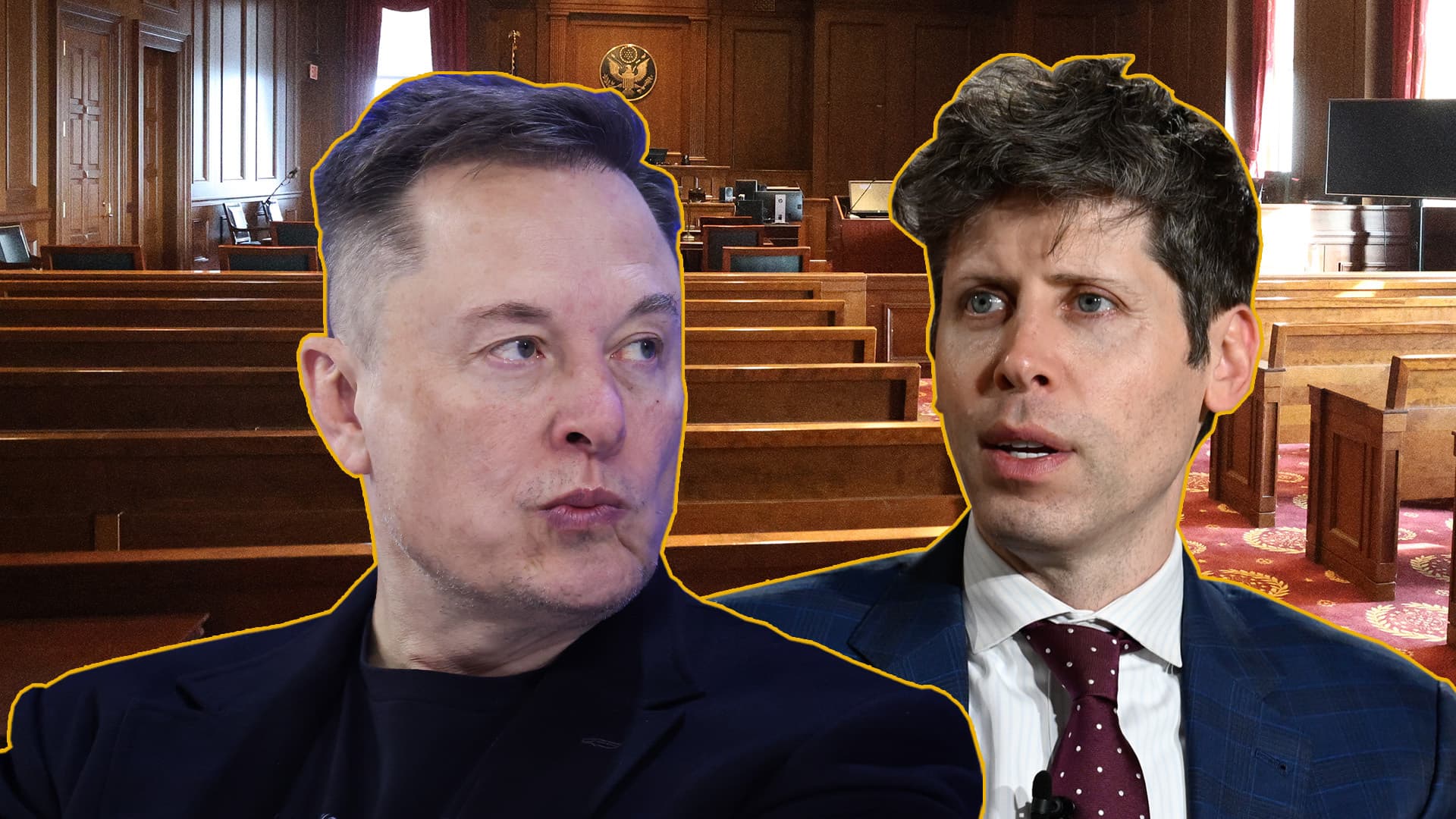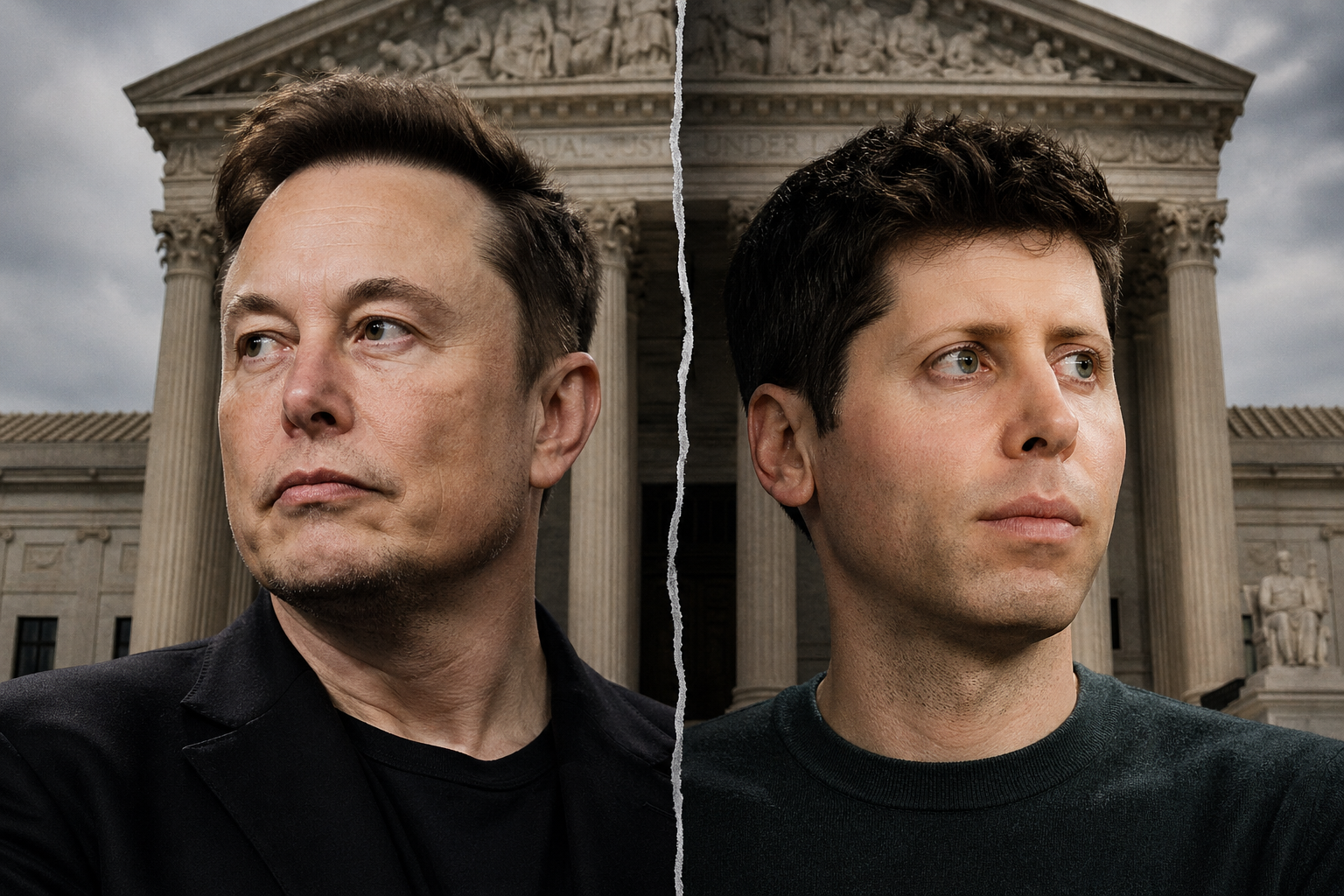
They started OpenAI together a decade ago. This week, Elon Musk and Sam Altman face each other in federal court. The verdict could reshape the most influential AI company in the world, just months before its planned IPO.
[IMAGE: Split portrait of Elon Musk and Sam Altman against a courthouse backdrop | Composite from press materials, Unsplash courtroom imagery]
A four-week showdown begins in Oakland
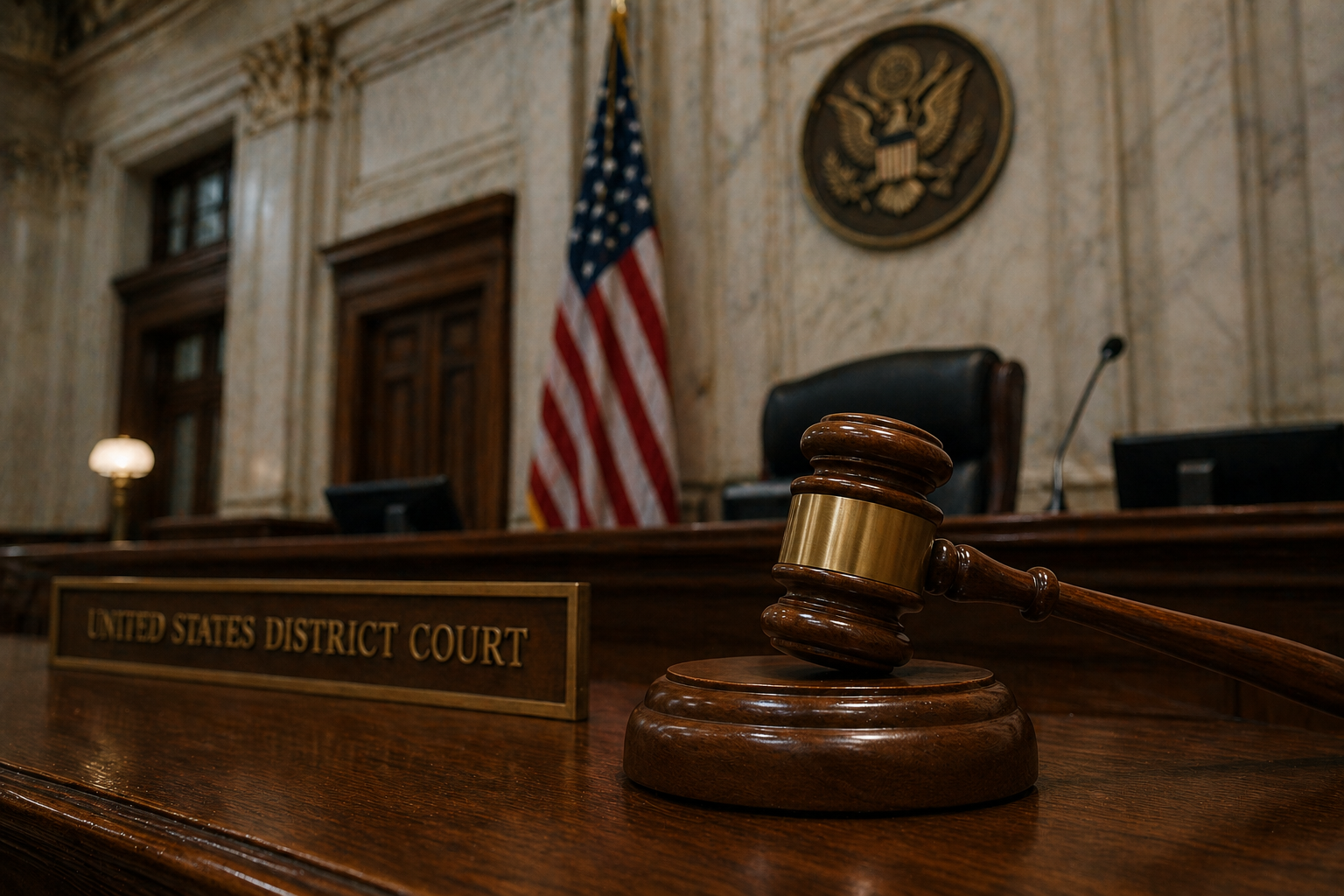
Jury selection began Monday, April 27, in the U.S. District Court for the Northern District of California. Opening statements are scheduled for Tuesday. Judge Yvonne Gonzalez Rogers will preside. The trial is expected to last roughly four weeks, wrapping up in late May.
The judge is running a tight schedule. Court will be in session Monday through Thursday for the duration. Each side gets 22 hours to present their entire case, including witnesses, opening, and closing arguments. Microsoft, named as a co-defendant, gets five hours. Nine jurors will be seated, with no alternates.
Musk is suing OpenAI, CEO Sam Altman, President Greg Brockman, and Microsoft. He is seeking up to $134 billion in damages, the removal of Altman and Brockman from leadership, and a court order forcing OpenAI back into its original nonprofit form. He has told the court that any monetary damages should go to OpenAI's charitable arm, not to him personally.
The case has been narrowed dramatically since it was filed. Of the 26 claims Musk originally brought in November 2024, only two survived to trial: breach of charitable trust and unjust enrichment. Last week, Musk himself moved to dismiss his fraud claims, a strategic decision his lawyers framed as an effort to streamline the case and keep jurors focused on the central question of whether OpenAI's nonprofit assets were wrongfully converted.
 Joe Dworetzky and Jay Harris, Bay City News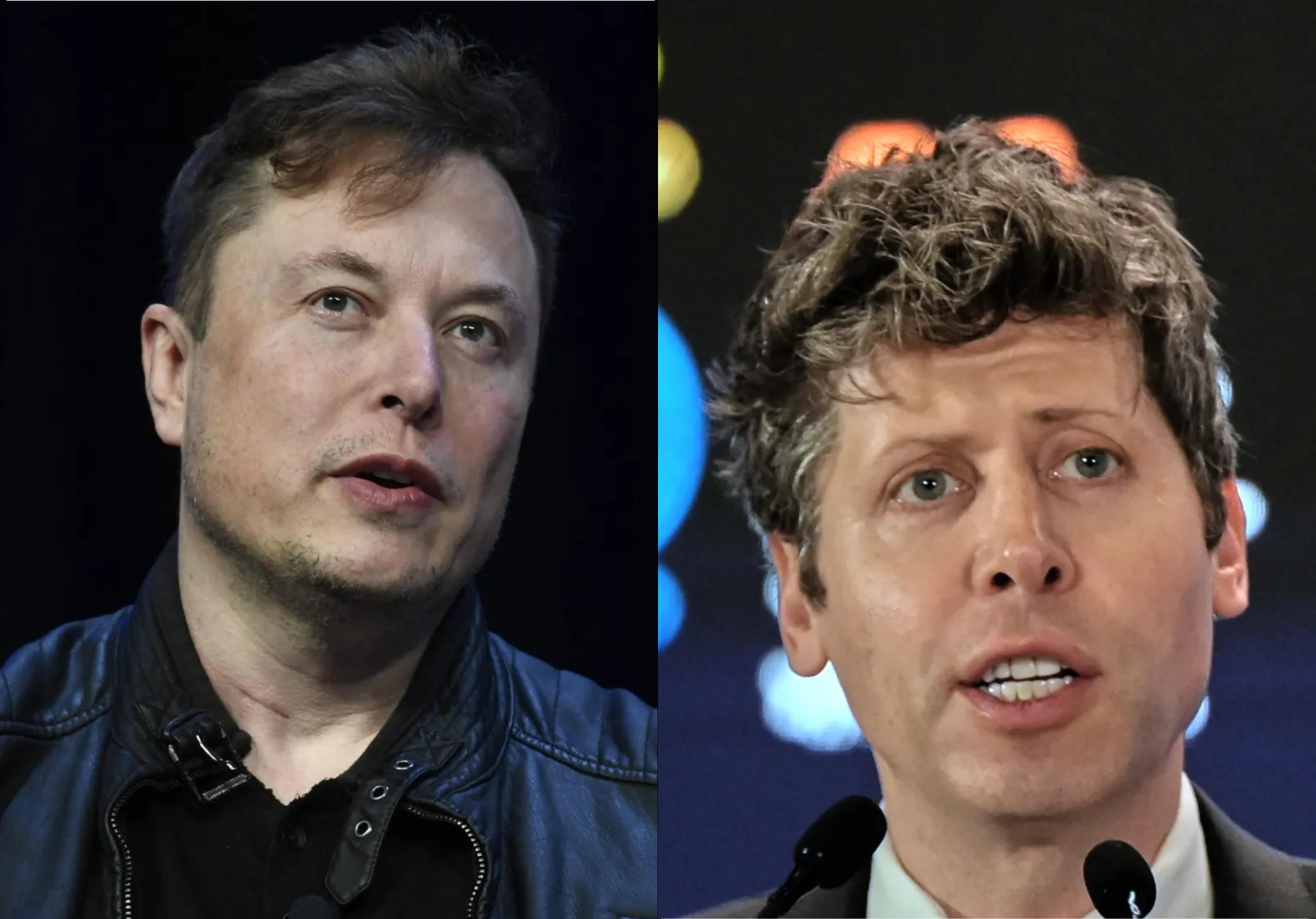
Why this affects the tools you use every day
OpenAI is not just another tech company. Its models sit inside Microsoft Word, Excel, Outlook, Teams, and the Copilot products used by hundreds of millions of professionals daily. ChatGPT has more than 800 million weekly users. If the courts force OpenAI to unwind its for-profit structure, the commercial pipeline that delivers these tools to professionals could be disrupted.
Consider what depends on that corporate structure. A finance analyst running monthly forecasts inside Copilot. A marketing manager generating campaign briefs in ChatGPT. A product team building automation on the OpenAI API. All of them depend on a for-profit OpenAI that can sign enterprise contracts, distribute revenue, and operate at scale.
Musk wants that structure dismantled. He wants the company stripped back to a charity. Altman wants the opposite. He is preparing to take OpenAI public in what could be the largest IPO in history, targeting a Q4 2026 debut at a valuation north of $850 billion. The two visions are not compatible.
OpenAI has already disclosed the lawsuit as a material risk in documents shared with prospective IPO investors. If Musk wins on the breach of charitable trust claim and the judge orders the for-profit subsidiary dissolved, the IPO collapses. That outcome would also disrupt the company's contract with Microsoft, which has invested over $13 billion in OpenAI and holds an exclusive license to its frontier models.
The arguments each side will make
Musk donated roughly $38 million to OpenAI in its early years, when the company was a nonprofit pledged to develop AI for the benefit of humanity, free from the pressures of shareholders. He helped fund the early research, served on the board, and recruited talent. He left in 2018 after a failed attempt to take over the company and merge it with Tesla. In 2023, he founded xAI, his own for-profit AI company, which now operates the Grok chatbot.
His core legal argument is straightforward. The assets and intellectual property built with his charitable donations were legally dedicated to a public-good mission. Altman and Brockman wrongfully converted those assets into a for-profit machine that enriched themselves, OpenAI's investors, and Microsoft. Musk is asking the court for "disgorgement," a legal remedy that forces defendants to return gains that were wrongfully obtained. His economic experts have calculated those gains at $109 billion for OpenAI and $25 billion for Microsoft.
OpenAI's defense rests on two pillars. First, the company will argue that Musk himself proposed a for-profit structure in 2017, even suggesting OpenAI merge with Tesla under his control. Internal emails, text messages, and Greg Brockman's personal journals are expected to feature heavily in both directions. Second, OpenAI will argue that the lawsuit is competitive sabotage dressed up as principle. The company has called it "a harassment campaign that's driven by ego, jealousy and a desire to slow down a competitor."
The personal element is unavoidable. Musk has publicly called Altman "Scam Altman." Altman has called the trial "Christmas in April." Both quotes are likely to surface in court, and both men are expected to take the stand. Microsoft CEO Satya Nadella is also on the witness list.
What to watch in the coming weeks
The trial is bifurcated. Phase one decides liability, including whether Musk filed his suit within the statute of limitations. The 2-to-4-year limitation window is one of OpenAI's strongest defenses. If the jury finds that Musk waited too long after he had reason to know about the for-profit shift, the judge may direct a verdict for OpenAI before the case ever reaches damages.
If Musk clears that bar, phase two moves to damages and equitable remedies. The judge has the final word. The nine jurors deliver an advisory verdict only. Judge Gonzalez Rogers decides what actually happens to OpenAI, Altman, and the for-profit subsidiary.
Wagering markets currently favor Altman. Polymarket has Musk's odds at roughly 35%, making OpenAI a 2-to-1 favorite to win the case. Musk's chances have ranged from a high of 61% in January to a low of 32% in March, swinging with each pretrial ruling.
For working professionals, the practical question is not who wins the personal battle between two of the wealthiest men in technology. It is whether the most important AI company in the world will look the same in five weeks. The answer starts to take shape Tuesday morning, when opening statements begin in Oakland.
 Ashley Capoot