Anthropic launched Claude Design today. You describe a slide deck, a prototype, or a one-pager in plain English, and Claude builds it. No templates. No design skills required. It is rolling out to Pro, Max, Team, and Enterprise plans throughout the day.
What Claude Design Actually Does
The pitch is simple. Tell Claude what you want to make. It makes it. Then you refine it by talking to it.
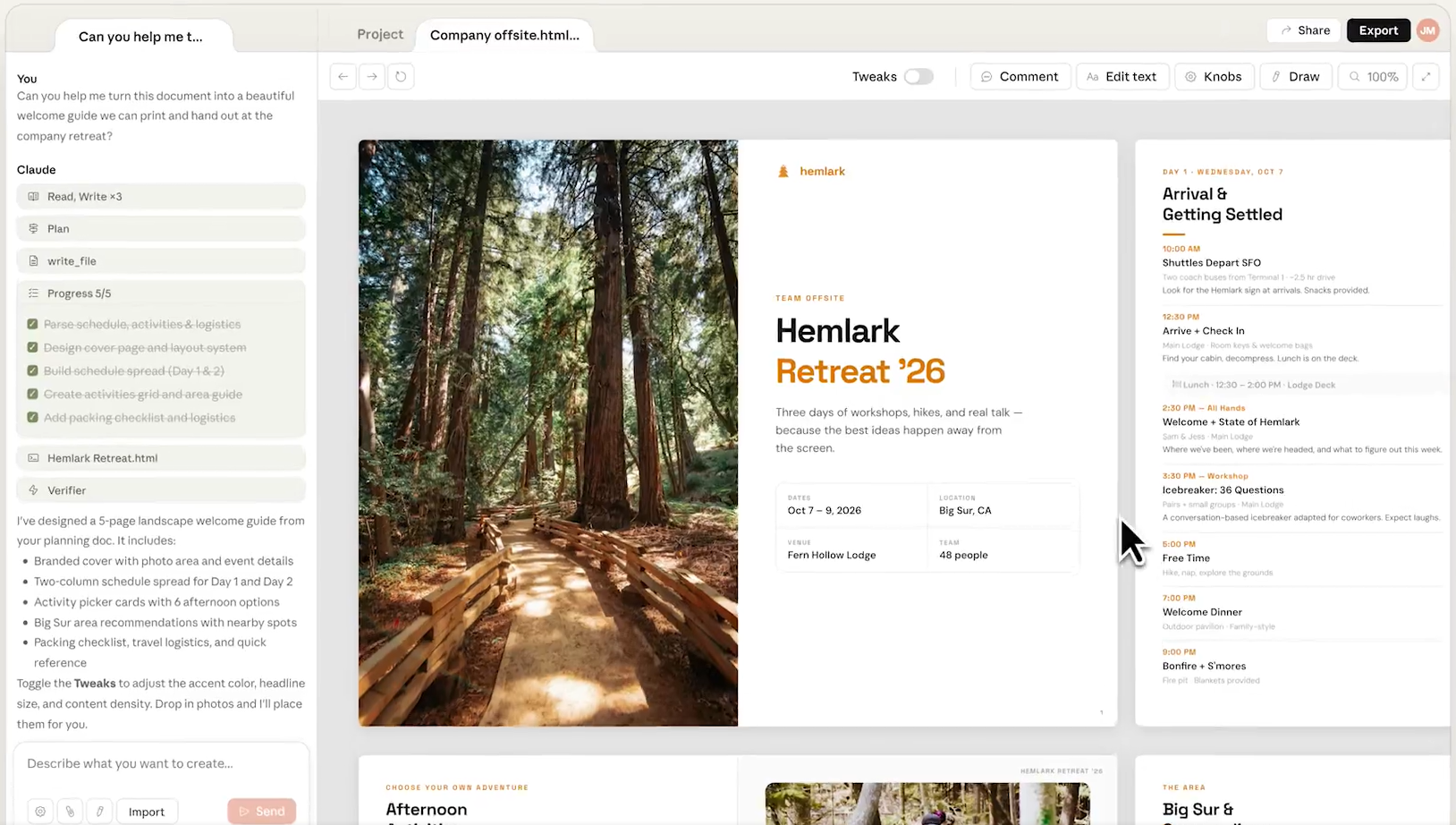
According to Anthropic, you could ask Claude to "prototype a serene mobile meditation app with calming typography, subtle nature-inspired colors, and a clean layout." In seconds, you get a working mockup. Ask for a dark mode toggle, and it adds one. Ask for a larger font, and it resizes.
The refinement tools go deeper than chat. Users can leave inline comments, make direct edits, or use custom sliders that Claude generates on the fly to adjust specific elements like color, spacing, or layout.
The product is powered by Claude Opus 4.7, the new flagship model Anthropic released yesterday. Anthropic calls it their most capable vision model, meaning it can see, understand, and generate visual layouts with a level of taste that previous models could not match.
The Onboarding Feature That Changes Everything
Here is where Claude Design gets interesting for companies.
Claude Design can read your company's codebase, website, and existing design files during onboarding. It learns your colors, your fonts, your spacing rules, and your overall visual style. Every output after that stays on-brand automatically.
No style guide to write. No design system to document. Claude figures it out from what you already have.
For Enterprise organizations, the feature is off by default and must be turned on by an administrator. This gives IT teams time to review what Claude is reading before it starts producing work.
The practical impact is huge. A marketing manager can draft a pitch deck that looks like it came from the design team. A product manager can sketch a wireframe that matches the company's app. A salesperson can put together a one-pager that does not embarrass the brand.
 Aisha Malik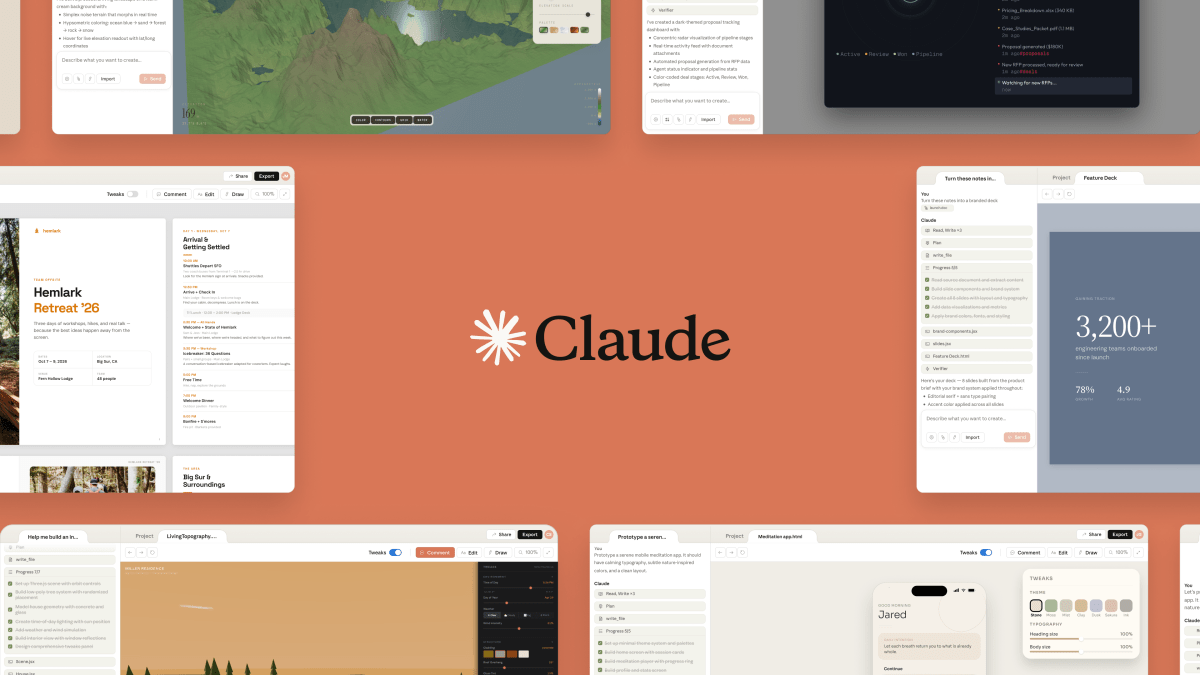
The Canva Partnership That Nobody Expected
Claude Design is not trying to kill Canva. It is trying to feed it.
Anthropic and Canva announced a formal partnership alongside the launch. When you finish a design in Claude, you can export it straight to Canva, where it opens as a fully editable, collaborative file. Your team keeps working on it in the tool they already use.
The export options are broad. PDF, live URL, PowerPoint, raw HTML, or the Canva handoff. You can also import content from text prompts, document uploads (Word, PowerPoint, Excel), and a web capture tool that lets you pull design elements from any public webpage.
Saw a layout you like on a competitor's site. Capture it. Claude adapts it to your brand.
Why This Matters for Your Work
If you have ever stared at a blank Google Slide at 11pm, this product is for you.
The target user is not the professional designer. It is the person without a design workflow who needs to turn an idea into something presentable, fast. Founders. Product managers. Marketers. Operations leads. Sales teams.
Datadog, an early tester, says Claude Design cut their design iteration time from a week to a single conversation. According to Datadog product manager Aneesh Kethini, what used to take rounds of briefs, mockups, and reviews now happens live during a meeting.
The handoff to Claude Code is the quiet power move. Once you finish a prototype, you can pass it to Claude Code (Anthropic's coding agent) and it will build the real product. Idea to mockup to working app in one chat. No other design tool offers that full stack today.
For companies that already pay for Claude, access is included with existing subscription plans. There is an option to keep going past usage limits by enabling extra usage, but no separate fee for the core product.
Introducing Claude Design by Anthropic Labs: make prototypes, slides, and one-pagers by talking to Claude.
— Claude (@claudeai) April 17, 2026
Powered by Claude Opus 4.7, our most capable vision model. Available in research preview on the Pro, Max, Team, and Enterprise plans, rolling out throughout the day. pic.twitter.com/2BgBGtgYGX
The Bigger Picture
The timing is not an accident. Adobe and Canva both unveiled their own AI-powered visual tools this week. Anthropic's launch lands right in the middle of that wave.
But Anthropic is playing a different game. Adobe and Canva are adding AI features to their existing design tools. Anthropic is building a conversational design tool from scratch, tied directly to a frontier AI model that already understands code, text, and images natively.
The strategic read: Anthropic is not just selling AI. It is building a vertical stack of professional tools. Claude Cowork for file management and drafting. Claude Code for software engineering. Now Claude Design for visuals. Each one is a tool that used to require a specialist, now available to anyone who can describe what they want.
What to Watch
Claude Design is in research preview, which means it is still experimental. Expect rough edges. Expect the feature set to change.
But the direction is clear. Anthropic is expanding from "AI chatbot" to "AI productivity suite." The next few months will show whether Claude Design can match the polish of Canva's templates and Figma's collaboration, or whether it becomes the tool that founders, PMs, and marketers actually use while the design professionals stay on their existing stacks.
If your team uses Claude already, turn this on and test it this week. The gap between idea and visual just got a lot smaller.