
Anthropic shipped two major updates to Claude Code today. A full desktop redesign with parallel sessions, and a new feature called Routines that lets developers set automations to run on a schedule, even when their computer is off.
The Desktop Redesign Nobody Expected
The Claude Code desktop app looks completely different as of today. Multiple coding sessions now run side by side in a single window, managed through a new sidebar that lets developers switch between active tasks without losing context.
But the layout changes go deeper than session management. The redesign adds an integrated terminal, a file editor, HTML and PDF preview, and a faster diff viewer. All of it lives inside a drag-and-drop layout that developers can rearrange however they want.
Under the hood, parallel sessions are powered by git worktrees. Every new session gets its own isolated copy of the project. Changes in one session do not affect others until the developer commits. This was one of the most requested features on Claude Code's GitHub repository, and it is now built into the core product.
For anyone managing multiple coding tasks at once, this eliminates the need to open separate app windows or juggle terminal tabs. One window. Multiple AI-powered sessions. Full isolation between them.
Routines: The Feature That Changes the Equation
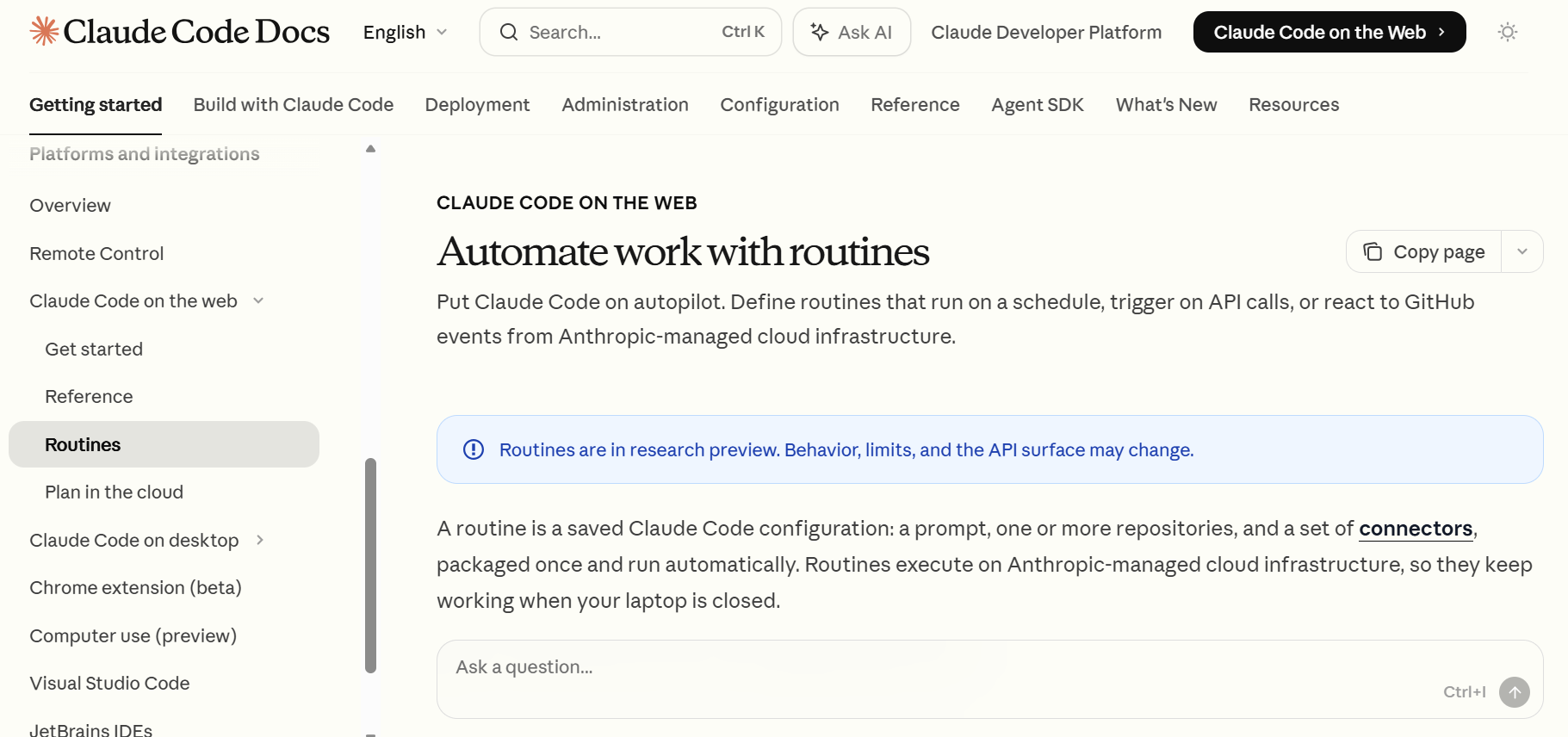
The bigger announcement is Routines. A Routine is a Claude Code automation that runs without you.
Here is how it works. You define a prompt, connect a code repository and any relevant tools, and then choose a trigger. That trigger can be a schedule (hourly, nightly, weekly), an API call, or a GitHub event like a new pull request. Once configured, the Routine runs on Anthropic's cloud infrastructure. Your laptop can be closed.
This matters because developers already use Claude Code to automate parts of their workflow. But until now, setting up recurring tasks meant managing your own cron jobs, infrastructure, and server connections. Routines package all of that into a single configuration.


Three types of Routines launched today. Scheduled Routines work like intelligent cron jobs. Anthropic's example: "Every night at 2am, pull the top bug from Linear, attempt a fix, and open a draft PR." API Routines give every automation its own endpoint and authentication token. Wire it into your deploy pipeline, your monitoring alerts, or your internal tools. GitHub Webhook Routines respond to repository events. Claude opens one session per pull request and keeps feeding updates from that PR into the same session, so it can handle follow-up comments and CI failures automatically.
What This Means If You Manage a Dev Team
The implications here reach beyond individual developers. If you lead a technical team, Routines create a layer of always-on automation that works your backlog without waiting for someone to open their laptop.
Early users are already building patterns around this. Nightly issue triage that labels, assigns, and posts a summary to Slack. Automated code review that checks every new pull request against a custom security and performance checklist before a human reviewer looks at it. Documentation drift scanning that catches outdated API references and opens update PRs automatically.
The pricing model keeps Routines within existing subscription tiers. Pro, Max, Team, and Enterprise users all get access today as a research preview. Routines consume the same usage limits as interactive sessions, with an additional daily cap on how many can run.
Anthropic Is Building a Development Platform
This is the fourth major update from Anthropic in the past two weeks. Claude Cowork went generally available with enterprise-grade admin controls. Managed Agents launched in public beta on the API. The ant CLI shipped for direct API interaction from the terminal. And now Routines and the desktop redesign.
The pattern is clear. Anthropic is no longer positioning Claude Code as just an AI coding assistant. It is building a full development platform where AI handles recurring work, responds to events, and operates autonomously in the cloud while developers focus on decisions that require human judgment.
For non-technical professionals watching the AI space, this is worth paying attention to. The tools that software teams use to build products are becoming increasingly autonomous. The companies that figure out how to integrate these workflows first will move faster than everyone else. And that speed advantage compounds over time.
Routines are available now at claude.ai/code for anyone on a paid plan with Claude Code on the web enabled. If you are already using Claude Code in the terminal, type /schedule to get started.