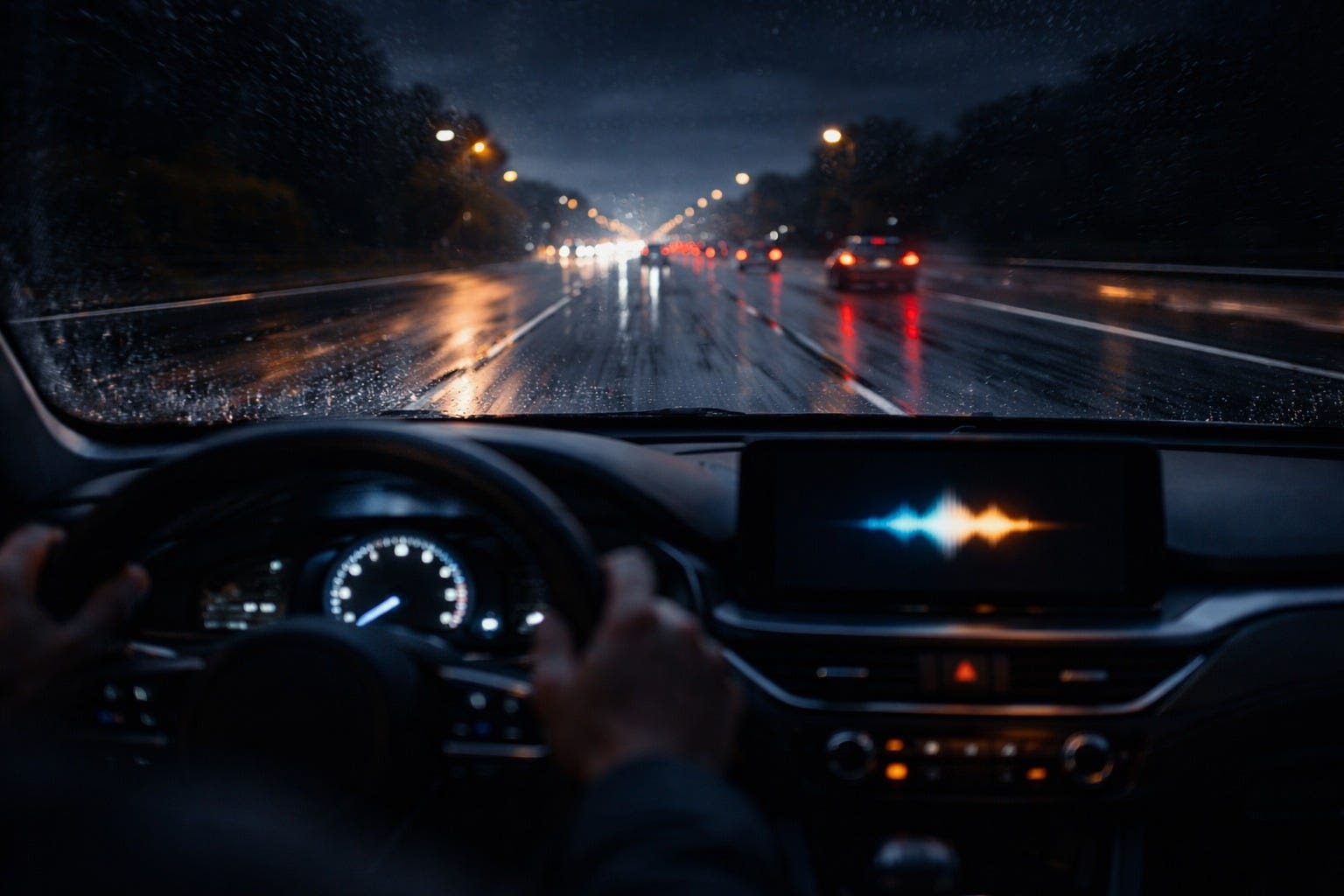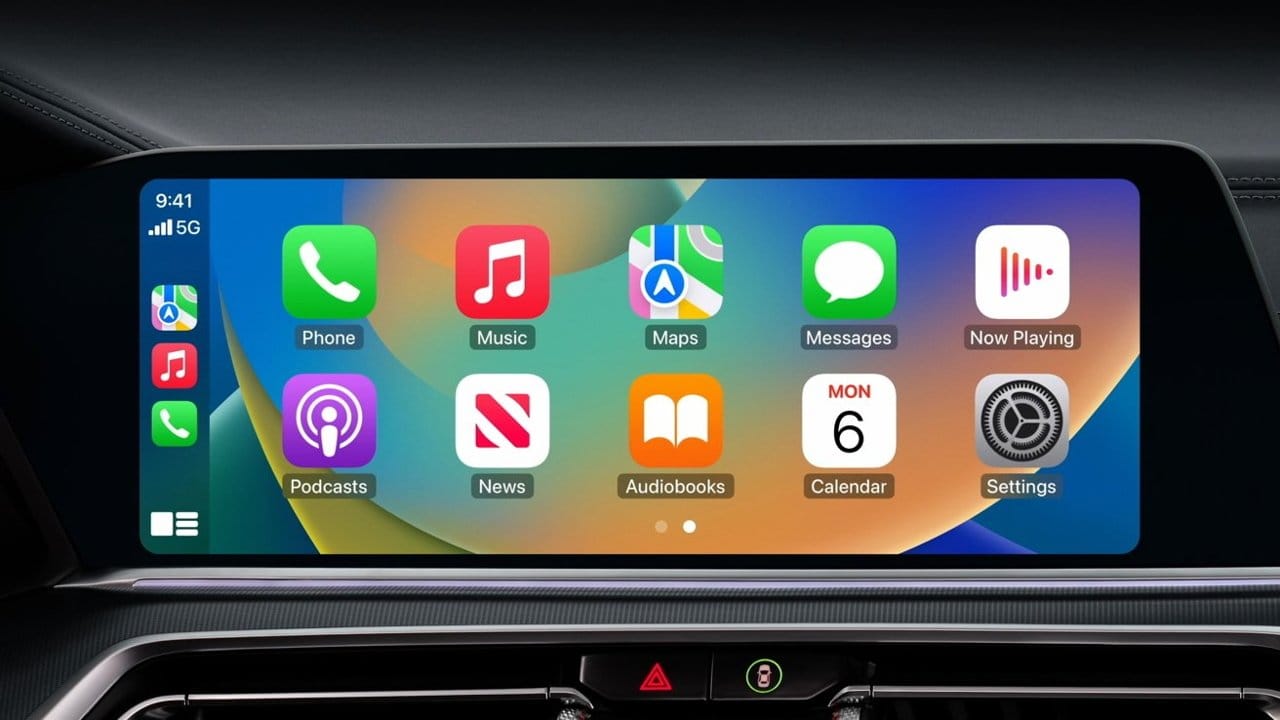
Apple quietly created a new app category in CarPlay that lets third-party AI assistants ride shotgun. ChatGPT shipped first. But the real story is the door Apple just opened for every AI company to compete for the last daily screen nobody had claimed: your car's dashboard.
Siri No Longer Drives Alone
With iOS 26.4, Apple added a category called "voice-based conversational apps" to CarPlay. ChatGPT was the first to ship into it, on April 2. The update was buried inside a routine iOS release. Most coverage treated it as a minor feature. It is not.
This is the first time Apple has allowed a third-party AI assistant to operate inside CarPlay as a standalone app. Previously, Siri was the only voice intelligence available in Apple's car ecosystem. That monopoly just ended.
Any developer who meets Apple's rules can now build a CarPlay AI app. Gemini is the obvious next entry. Google has every reason to reach the millions of iPhone users who connect to CarPlay daily, even though Android Auto is its home turf. Claude from Anthropic could follow, though the company tends to move slower on consumer products.
ChatGPT is now available in CarPlay.
— OpenAI (@OpenAI) April 2, 2026
The voice mode you know, now available on-the-go.
Rolling out to iPhone users running iOS 26.4+ where CarPlay is supported. https://t.co/aXQqH9MNuG pic.twitter.com/yk3qdLa99r
The speed tells its own story. Apple opened the category on March 24. OpenAI shipped a full CarPlay app in seven days. Meanwhile, Google announced Gemini for Android Auto back in November 2025. Four months later, according to reports, 92% of Android Auto users still do not have it. The company that owns Android, owns Android Auto, and owns Gemini could not get its own AI into its own car platform before a competitor shipped on someone else's.
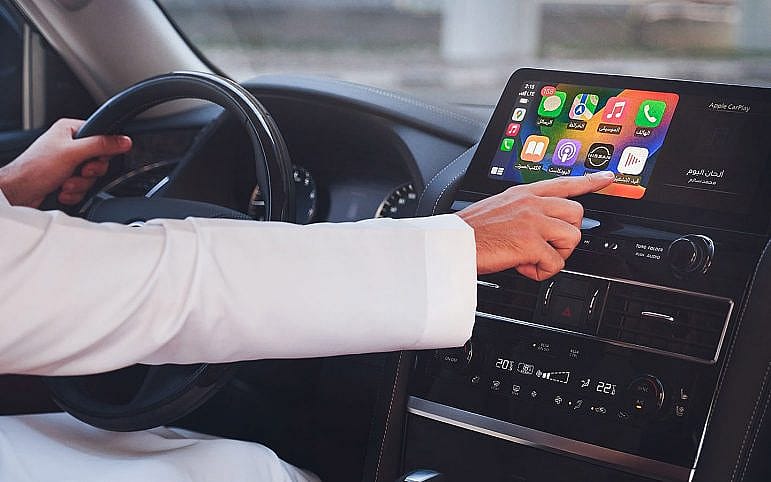
What You Can Actually Do (and What You Cannot)
Apple's rules for this category are deliberately tight. They tell you exactly how the company thinks AI should behave in a car.
Voice only. No text appears on screen during a session. The entire interface is two buttons: End and Mute. You will not see transcripts, suggested replies, or anything you might be tempted to read while driving. This is enforced at the platform level. Every AI app in this category must follow it.
No wake word. You have to physically tap the ChatGPT icon to start a conversation. Siri keeps the only ambient listening slot, and Apple is not sharing it. The reason is practical: two assistants listening at once in the same cabin is a safety problem, not just a UX annoyance. Casual mentions triggering the wrong agent while driving creates real risk.
No location access. Not GPS, not coarse location, not even what country the car is in. This means ChatGPT cannot answer the questions you most want to ask in a car: what is open near me, where is the closest gas station, how bad is traffic on my route. You can work around it by telling the assistant where you are, but the friction is real.
No tool use. The app cannot touch Maps, Music, Messages, climate controls, or any vehicle data. If you ask ChatGPT to start navigation, it cannot. If you ask it to skip a song, it cannot. It runs in a complete sandbox.
Why This Matters for Anyone Who Works From Their Car
Strip away the tech details, and here is what you actually get: a smart conversation partner during your commute, your sales route, or your daily drive. That is a narrower product than it sounds, but for specific professionals, it is genuinely useful right now.

If you are a sales rep who spends two hours a day between client meetings, you can now brainstorm talking points, rehearse a pitch, or debrief a meeting out loud while driving. If you are a manager heading to the office, you can draft the structure of an email or think through a decision before you sit down. If you are a small business owner who commutes alone, you just gained a hands-free thinking partner that is smarter than any podcast.
The key limitation: anything location-dependent is off the table. You cannot ask what restaurants are nearby for a client lunch. You cannot ask about traffic. You cannot get directions. Siri still handles all of that. The mental model is simple: Siri runs the car, ChatGPT runs the conversation.
The feature works on all ChatGPT subscription tiers, including Free. No extra cost. Any car that supports CarPlay works. You just need iOS 26.4 on your iPhone.
 Chance Miller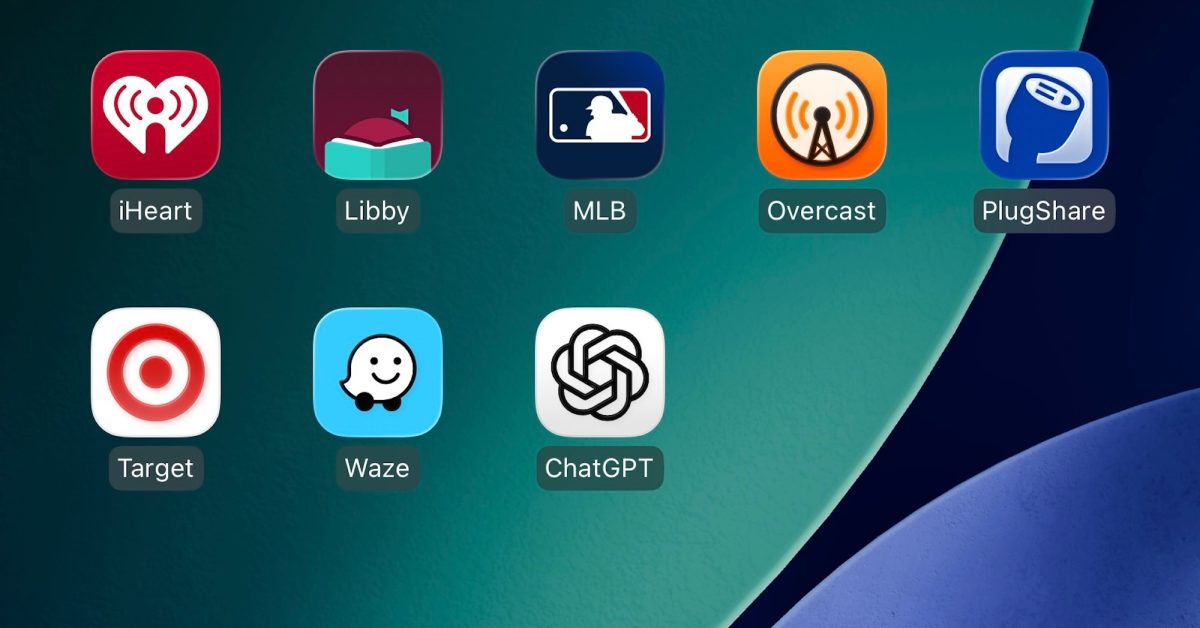
The Bigger Picture: Your Car Is the Next AI Battleground
The CarPlay category is the signal. The apps are just the first moves.
Apple opened CarPlay to third-party AI chatbots on March 24. OpenAI shipped a full CarPlay app in 7 days.
— Aakash Gupta (@aakashgupta) April 2, 2026
Meanwhile, Google announced Gemini for Android Auto in November 2025. Four months later, 92% of Android Auto users still don't have it. The same company that owns Android,… https://t.co/3uwhsOAuHg
Apple has a pattern here. When it opened default browser and mail app settings in iOS 14, it took years for that decision to reshape how people used their phones. This could follow the same trajectory. Once multiple AI assistants are available in CarPlay, Apple will likely add a default assistant setting, just as it did for browsers. At that point, ChatGPT's first-mover advantage shrinks, and the competition shifts to which AI is most useful in a car.
The deeper question is whether Apple opens the sandbox further. Right now, CarPlay AI apps are essentially a voice call to a chatbot. If Apple adds a capability-request bridge, where these apps can ask Siri for scoped permissions on specific actions like one-time location access, this becomes a real third-party AI platform. If it stays locked down, it remains a niche feature for people who want a smarter conversation partner on long drives.
Two iOS releases will tell us everything. A scoped location bridge or a default AI assistant setting in iOS 26.5 or 26.6 means Apple is serious about making the car dashboard a competitive AI surface. Silence means they are treating it as a pressure valve for Siri complaints, and nothing more. Either way, your commute just got a lot more interesting.
 Mahesh Gupta